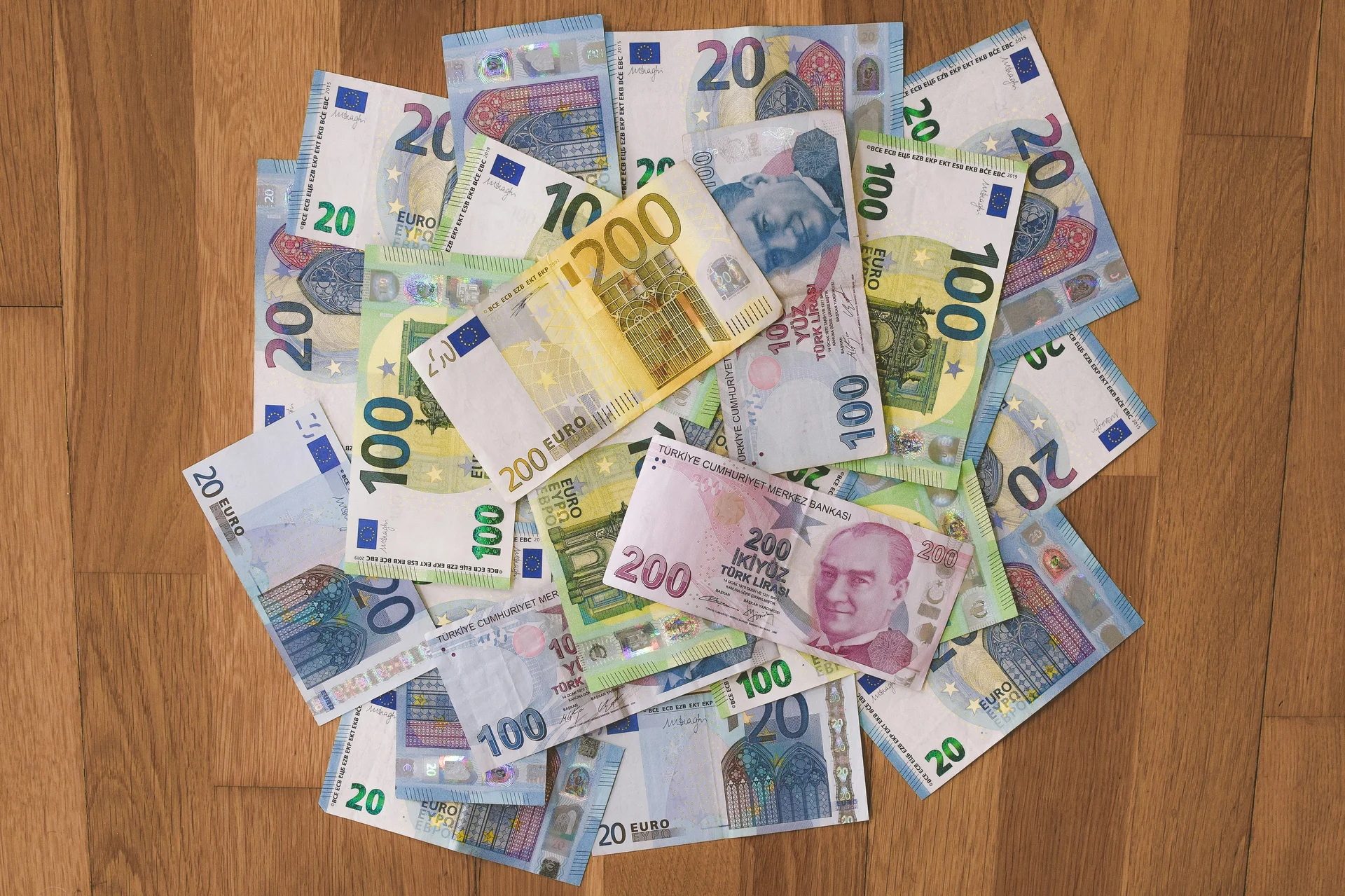

The Lira Trap: Why 40% Bank Interest Still Loses You Money
Here is a number that should terrify every Turkish saver: 1 USD bought 7.4 TRY in January 2020. By March 2026, it buys over 42 TRY. That is a loss of more than 80% in purchasing power in just six years.
Let that sink in. If you had 1,000,000 TRY in a Turkish bank in 2020, it was worth roughly $135,000. Today that same 1,000,000 TRY is worth about $23,800 — even if you never spent a single kuruş.
The Interest Rate Illusion
Turkish banks currently offer savings rates of 40-45% annually. At first glance, this sounds incredible. Where else in the world can you earn 40% on a savings account?
But here is the trap: Turkey's real inflation rate has been running between 50-65% for most of 2024-2026. The official TUIK numbers are disputed — independent research groups like the Inflation Research Group (ENAG) consistently report rates 20-30 percentage points higher than official figures.
Let's do the math on a 100,000 TRY deposit:
- Bank interest earned (40%): +40,000 TRY
- Real inflation (55%): Your purchasing power needs 155,000 TRY to buy what 100,000 TRY bought last year
- Net result: You have 140,000 TRY but need 155,000 TRY — you lost 15,000 TRY in real terms
You feel richer on paper. You are actually poorer. This is the lira trap.
Erdogan's Monetary Experiment
What makes Turkey's situation unique among G20 nations is the deliberate policy choice behind it. For years, President Erdogan insisted on cutting interest rates to fight inflation — the exact opposite of what every economics textbook prescribes. His argument: high interest rates *cause* inflation (mainstream economists disagree unanimously).
The result was a currency in freefall:
| Year | USD/TRY Rate (January) | Annual Lira Decline |
|---|---|---|
| 2020 | 5.95 | — |
| 2021 | 7.40 | -24% |
| 2022 | 13.30 | -80% |
| 2023 | 18.70 | -41% |
| 2024 | 29.50 | -58% |
| 2025 | 35.80 | -21% |
| 2026 | 42.00+ | -17%+ |
Even after the policy reversal in mid-2023 — when new central bank governor Hafize Gaye Erkan hiked rates from 8.5% to 50% — the lira continued to weaken. The damage to confidence was already done. International investors remain skeptical, and capital outflows continue.
The lesson: When a currency loses 80% in six years, no bank interest rate can compensate. You need assets denominated in a stronger currency.
Why Turks Are Moving to Dollar-Denominated Assets
Turkish people are not passive victims of the lira crisis. They have been actively seeking protection for decades. The traditional playbook includes:
Gold (Altın)
Turkey has one of the highest gold ownership rates in the world. The Grand Bazaar in Istanbul has been a gold trading hub for centuries. Turkish households hold an estimated 3,500-5,000 tonnes of gold — worth over $250 billion.
The problem: Gold does not generate income, has significant buy/sell spreads at jewelers (5-15%), and the government has repeatedly pressured citizens to convert gold to lira deposits through various incentive schemes.
US Dollar Cash (Dolar)
Millions of Turks keep dollar bills at home or in FX-denominated bank accounts. At various points, over 60% of all bank deposits in Turkey have been in foreign currencies.
The problem: The government has introduced increasingly aggressive measures to discourage dollar holding:
- KKM (Currency-Protected Deposit) schemes that punish early withdrawal
- TCMB (Central Bank) interventions that burn through reserves
- Regulatory pressure on banks to limit FX purchases
- Political rhetoric painting dollar buyers as "economic saboteurs"
BIST (Istanbul Stock Exchange)
The Borsa Istanbul has surged in nominal TRY terms. The BIST-100 index went from around 1,400 in 2020 to over 10,000 in 2026 — a 7x return that sounds spectacular.
The problem: When you convert BIST returns to dollars, the picture changes dramatically:
- BIST-100 in January 2020 (USD terms): ~235
- BIST-100 in March 2026 (USD terms): ~238
- Real USD return: approximately 0% over 6 years
The entire BIST rally was an illusion created by the lira's collapse. Turkish stocks didn't create wealth — they barely preserved it in dollar terms. Meanwhile, the S&P 500 went from 3,200 to over 5,800 in the same period — a real gain of 80%+.
What you actually need is not TRY-denominated assets — it is USD-denominated assets that grow.
Traditional Routes vs OKX: A Real Comparison
If you are a Turkish investor who has decided to buy US stocks, here are your realistic options as of March 2026:
| Method | Funding | Setup Time | Available Stocks | Short Selling | Minimum |
|---|---|---|---|---|---|
| IBKR (Interactive Brokers) | USD wire transfer | 1-2 weeks | Full market | ✅ (margin account) | $2,000+ |
| Local Broker (İş Yatırım, etc.) | TRY | 2-3 days | BIST only (limited US ETFs) | ❌ | Varies |
| eToro | Credit card / wire | 3-5 days | Partial US stocks | ✅ (CFD) | $50 |
| Midas App | TRY (in-app) | 1-2 days | ~500 US stocks | ❌ | ~100 TRY |
| OKX | TRY via P2P | 15 minutes | 500+ stock tokens | ✅ | ~$10 |
The key difference is not just speed — it is accessibility. Opening an IBKR account requires a USD wire transfer, which means going to a Turkish bank branch, paying 200-300 TRY transfer fees, waiting days, and dealing with increasingly hostile bank staff who are under pressure to discourage FX outflows.
OKX eliminates all of that. You go from TRY in your Papara or bank account to holding Tesla or Nvidia stock tokens in 15 minutes. No wire transfer. No dollar account. No branch visit. No questions about why you want to move money abroad.
Step-by-Step: Buy US Stocks with TRY in 15 Minutes
Here is the exact process, optimized for Turkish users.
Step 1: Register on OKX with Referral Code BUYSTOCK
Go to OKX.com and create your account. Use referral code BUYSTOCK to get reduced trading fees.
You will need:
- A Turkish phone number or email
- Your TC Kimlik (Turkish national ID card) for verification
OKX has a dedicated verification flow for Turkish residents. Turkey is one of OKX's largest markets globally — they process Turkish KYC applications quickly, usually within 10-20 minutes.
Step 2: Complete KYC with Your Kimlik
Upload your TC Kimlik number and a selfie. The system verifies your identity against Turkish databases. No proof of address is required for basic verification.
Pro tip: Use good lighting for your selfie and make sure your Kimlik is clearly readable. Blurry photos are the #1 cause of verification delays.
Step 3: Buy USDT with TRY via P2P
This is where Turkey has a massive advantage. The Turkish crypto P2P market is one of the most liquid in the world — Turkey ranks in the top 5 globally for crypto adoption, with an estimated 16-25% of adults having used cryptocurrency.
- Go to Buy Crypto → P2P Trading
- Select Buy USDT with TRY
- Choose your payment method:
- Bank Transfer (EFT/Havale) — Works with all major banks: Ziraat, Garanti BBVA, İş Bankası, Akbank, Yapı Kredi, Halkbank, VakıfBank
- IBAN Transfer — Universal option for any Turkish bank
- Select a verified seller with:
- 200+ completed orders
- Rate within 0.5% of the market rate (check doviz.com for reference)
- Place your order, transfer TRY to the seller
- Click "I've Paid" — seller releases USDT within 5-10 minutes
Current P2P rate (March 2026): Approximately 42-43 TRY per USDT, which closely tracks the real interbank rate. This is typically better than what banks offer for USD conversion.
Step 4: Buy Stock Tokens
- Transfer USDT from Funding Account to Trading Account (free, instant)
- Go to Trade → Perpetuals
- Search for the stock you want (e.g., TSLA-USDT, NVDA-USDT, AAPL-USDT)
- Set leverage to 1x (this means no amplification — equivalent to buying the stock outright)
- Choose Market Order for instant execution
- Enter the USDT amount you want to invest
- Click Buy/Long and confirm
You now own a stock token that tracks the real-time price of a US stock. When Apple goes up 3%, your position goes up 3%. Simple.
For detailed tutorials on specific stocks, see our complete OKX stock tokens guide.
The "Dollar Hedge" Strategy for Turkish Investors
Now that you know how to buy, let's talk about *what* to buy. Here are three strategies tailored for different Turkish investor profiles.
Strategy 1: The Simple Dollar Escape (Risk: Low)
Who it's for: Conservative savers who just want to stop losing money to the lira
What to do:
- Convert TRY to USDT via P2P
- Hold USDT in your OKX account
- That's it. You are now in dollars.
Why it works: Even just holding USDT (which is pegged 1:1 to the US dollar) means your purchasing power is protected from lira devaluation. If the lira drops another 20% next year, your USDT is worth 20% more in TRY terms — automatically.
Expected return: 0% in USD terms (you're just holding dollars), but likely +15-30% in TRY terms due to continued lira weakness.
Drawback: You earn nothing. You are just preserving purchasing power, not growing it.
Strategy 2: The US Stock Portfolio (Risk: Medium)
Who it's for: Investors who want to grow their wealth, not just preserve it
What to do:
- Convert TRY to USDT
- Build a diversified portfolio of 5 US stock tokens:
- 25% Microsoft (MSFT) — Enterprise AI leader, consistent growth
- 20% Nvidia (NVDA) — AI infrastructure monopoly
- 15% Amazon (AMZN) — E-commerce + cloud computing
- 15% Tesla (TSLA) — High-growth, high-volatility kicker
Why it works: You get the dollar hedge PLUS the growth of the world's best companies. The S&P 500 has returned an average of 10-12% annually over the past decade. Combined with lira devaluation, your TRY returns could be 25-45% annually.
Key consideration: Stock tokens are perpetual contracts with funding rates (0.02-0.05% every 8 hours). For positions held longer than 3-6 months, the funding costs add up. Rebalance quarterly and consider taking profits on large winners.
Use the Buffett Indicator tool to check if the US market is overvalued before going all-in.
Strategy 3: The Active Hedger (Risk: High)
Who it's for: Experienced traders who want maximum flexibility
What to do:
- Go long on US stocks you believe in
- Use the short-selling feature when you expect pullbacks
- Allocate positions based on macro outlook:
- Uncertain market: 50% long, 30% cash, 20% short
- Bearish market: 20% long, 30% cash, 50% short
Why it works for Turkey specifically: Turkish investors face a unique double risk — the lira *and* global markets can both fall simultaneously (e.g., during the 2022 global selloff, the lira also crashed). Having the ability to short means you can profit even when everything is going down.
Warning: This strategy requires active management and market knowledge. Do not attempt with leverage above 2x unless you are very experienced. Read our short selling guide before trying this.
Short Selling: When US Stocks Also Fall
Turkey is geographically surrounded by instability — Syria, Iraq, and the broader Middle East are right next door. A regional escalation could cause global markets to sell off sharply. What happens if you have moved your lira into US stocks, and then US stocks also crash?
This is where OKX's short-selling capability becomes critical for Turkish investors.
How Short Selling Works on OKX
Instead of clicking Buy/Long, you click Sell/Short. If the stock drops, you profit. If it rises, you lose.
Example scenario:
- Global tensions escalate, S&P 500 drops 15% over two weeks
- You short NVDA-USDT at $950, it falls to $810
- Your profit: ~14.7% on 1x leverage
Speed Comparison: Shorting Methods
| Platform | Can Short US Stocks? | Speed to Open Position | Minimum | Available from Turkey |
|---|---|---|---|---|
| IBKR | ✅ | Minutes (if funded) | $2,000+ | ✅ |
| eToro (CFD) | ✅ | Minutes (if funded) | $50 | ✅ |
| Turkish Brokers | ❌ | N/A | N/A | N/A |
| OKX | ✅ | Seconds | ~$10 | ✅ |
The key advantage of OKX: if you already have USDT in your account, you can open a short position in seconds. No need to borrow shares, no margin calls at traditional broker thresholds, no complex paperwork. When a crisis hits, speed matters.
Tax and Legal in Turkey
Is Crypto Trading Legal in Turkey?
Yes. As of March 2026, buying, selling, and trading cryptocurrency is legal in Turkey. What is *not* legal is using crypto as a payment method for goods and services (banned since April 2021). Trading on exchanges is a completely different category and remains legal.
MASAK and Compliance
MASAK (Mali Suçları Araştırma Kurulu — Financial Crimes Investigation Board) monitors large financial transactions, including crypto. What this means in practice:
- Exchanges operating in Turkey share data with MASAK
- Large transactions (typically above 75,000 TRY) may be flagged for review
- This is standard anti-money-laundering compliance, not a crypto ban
- Legitimate investors trading their own funds have nothing to worry about
Capital Gains Tax
Profits from crypto trading (including stock tokens) are taxed as income in Turkey under the progressive tax system:
| Annual Income (TRY) | Tax Rate |
|---|---|
| Up to 110,000 | 15% |
| 110,001 - 230,000 | 20% |
| 230,001 - 580,000 | 27% |
| 580,001 - 3,000,000 | 35% |
| Above 3,000,000 | 40% |
Practical advice:
- Export your OKX trading history regularly
- Calculate gains in TRY (the tax authority requires TRY-denominated figures)
- Declare in your annual income tax return (filed each March)
- Consult a SMMM (Serbest Muhasebeci Mali Müşavir) familiar with crypto
Important Disclaimer
This article provides general information about the Turkish financial landscape and cryptocurrency regulations. It is not financial, tax, or legal advice. Turkish regulations around crypto assets are evolving rapidly. Always consult a qualified Turkish financial advisor or tax professional before making investment decisions. Past performance of any asset does not guarantee future results. All investments carry risk, including the complete loss of capital.
Frequently Asked Questions
Is cryptocurrency trading legal in Turkey?
Yes, cryptocurrency trading is fully legal in Turkey as of 2026. The April 2021 regulation banned using crypto as a payment method for goods and services, but trading on exchanges remains legal. Turkey is one of the world's largest crypto markets, with major exchanges actively operating in the country. The SPK (Capital Markets Board) has been developing a comprehensive regulatory framework, but trading itself has never been prohibited. Always verify the latest regulations as they evolve.
Can I use Papara to buy USDT on OKX?
Yes, Papara is one of the most popular payment methods for buying USDT on OKX's P2P marketplace. Papara transfers are instant, which means the entire process — from sending TRY to receiving USDT — takes as little as 2-5 minutes. Simply select "Papara" as your payment method when browsing P2P sellers, transfer TRY to the seller's Papara account, and confirm payment. The seller then releases USDT to your OKX account. Most experienced P2P sellers on OKX accept Papara because of its speed and convenience.
Is USDT safer than holding lira in a bank?
From a currency risk perspective, USDT maintains a 1:1 peg with the US dollar, so it protects you from lira devaluation. However, USDT carries different risks: it is not insured by Turkey's TMSF (deposit insurance), it depends on Tether's reserves backing the peg, and it is held on an exchange rather than a regulated bank. The ideal approach for most people is diversification — keep an emergency fund in TRY at a bank (which is TMSF-insured up to 400,000 TRY), and move excess savings into USDT or stock tokens for dollar exposure.
What if the government bans crypto?
Turkey has not banned crypto trading and there are no credible signals that a complete ban is being considered. The government has instead moved toward regulation and taxation — a sign they want to control and profit from the sector, not eliminate it. However, if a ban were hypothetically enacted, you would still own your USDT on OKX and could withdraw it to a personal wallet or convert through other means. The decentralized nature of crypto means a complete ban is extremely difficult to enforce. That said, always keep some funds in traditional banking channels as a hedge against regulatory changes.
How much TRY do I need to start?
You can start with as little as 500 TRY (approximately $12 at current rates). OKX P2P sellers typically have minimum order sizes of 200-500 TRY. For a meaningful investment experience where you can build a diversified portfolio across multiple stock tokens, we recommend starting with at least 5,000-10,000 TRY. Remember: you do not need to invest everything at once. Many Turkish investors use a monthly DCA (Dollar-Cost Averaging) approach — converting a fixed amount of TRY to USDT every payday to build their position gradually.
---
*The Turkish lira crisis is not a temporary problem — it is a structural reality that has been building for years. Protecting your purchasing power is not speculation; it is financial self-defense. Register on OKX with referral code BUYSTOCK to start building your dollar-denominated portfolio today.*
*For a step-by-step buying tutorial, see our Turkey country guide. For similar crisis-driven strategies, read our guides on Argentina's peso collapse and Egypt's pound devaluation.*