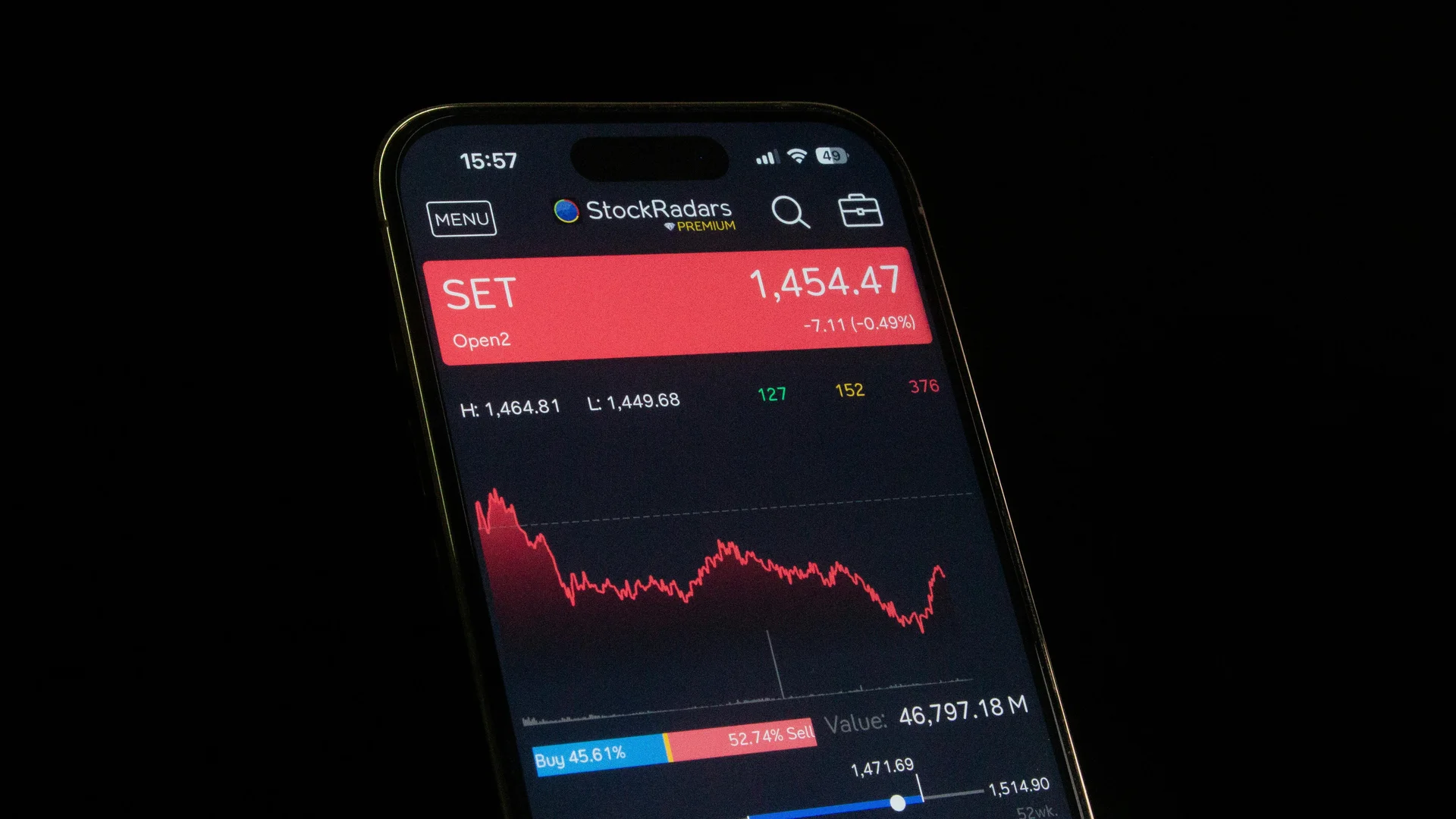

The Problem with Market Hours
If you have ever tried to buy or sell a stock at 7pm on a Tuesday, you know the frustration. The market is closed. Your order sits there until 9:30am the next morning. And by then, the price has already moved.
Traditional US stock market hours are 9:30am to 4:00pm Eastern Time, Monday through Friday. That is 6.5 hours per day, 5 days per week — a total of 32.5 hours out of 168 hours in a week. The market is closed 81% of the time.
Now think about what happens during that 81%:
- Earnings reports are released after market close (4:00pm-5:00pm ET) or before market open (7:00am-9:00am ET) — specifically designed to be outside trading hours
- Breaking news does not wait for market hours. A CEO resigns at 11pm on a Saturday? Too bad, you cannot trade until Monday.
- Global events happen in different time zones. A trade war announcement from Beijing at 3am ET? Markets in Asia react immediately. You wait until Monday morning.
- Weekend developments — two full days where anything can happen and you are powerless to react
For traditional stock traders, 81% of the week is spent helplessly watching news unfold without the ability to act. This is not just inconvenient — it can be expensive. How many times have you woken up Monday morning to find a stock gapped 5% because of weekend news?
Here is a comparison that makes the problem obvious:
| Market | Trading Hours | % of Week Available |
|---|---|---|
| NYSE / NASDAQ | 6.5 hrs/day, Mon-Fri | 19% |
| Pre/Post Market (Extended) | 10 hrs/day, Mon-Fri | 30% |
| Crypto Exchanges (Stock Tokens) | 24 hrs/day, 7 days | 100% |
This gap creates an opportunity — and that is exactly what we are going to talk about.
How 24/7 Stock Trading Works on Crypto Exchanges
Stock tokens on crypto exchanges like OKX trade around the clock, 365 days a year. Yes, including Christmas, New Year's Eve, and every weekend. But how is this possible when the actual stock market is closed?
The mechanics behind 24/7 stock tokens
Stock tokens are perpetual futures contracts that track the price of real stocks. They are not actual shares — they are synthetic instruments priced by a combination of:
- Last closing price: The stock's official closing price from the most recent trading session
- After-hours/pre-market activity: When available, tokens incorporate extended-hours pricing
- Market maker quotes: Professional market makers provide continuous liquidity and pricing based on news, sentiment, and related market movements
- Funding rate mechanism: Every 8 hours, a funding rate adjusts the token price to stay aligned with the actual stock price
During regular market hours (9:30am-4:00pm ET Monday-Friday), stock token prices track the real stock price almost tick-for-tick, with minimal deviation. The interesting part is what happens outside those hours.
Off-hours price behavior
When the US stock market is closed, stock tokens still trade, but with some important differences:
- Lower liquidity: Fewer traders are active, so the spread (difference between buy and sell price) widens. During regular hours, the TSLA token spread might be $0.05. On a Saturday night, it could be $0.50-$2.00.
- News-driven moves: Prices move primarily in response to news events, not continuous price discovery. A major tweet from Elon Musk at midnight will move the Tesla token price immediately.
- Anticipatory pricing: Weekend prices often reflect what traders expect the stock to open at on Monday. If bad economic data comes out on Saturday, stock tokens may drop as traders price in Monday's expected sell-off.
- Slower moves: Without the intense volume of regular trading hours, price movements tend to be more gradual (except during major news events).
Is the off-hours price accurate?
Mostly, yes — but not perfectly. I have tracked this over several months, and here is what I have found:
| Scenario | Token Price Accuracy vs Monday Open |
|---|---|
| Quiet weekend (no news) | Within 0.1-0.3% of Monday open |
| Minor news event | Within 0.5-1.5% of Monday open |
| Major news event (earnings, crisis) | Within 1-3% of Monday open |
| Black swan event | Can deviate 3-5%+ from Monday open |
The accuracy is good enough for positioning purposes, but not precise enough for tight scalping. This is an important distinction that we will come back to.
Weekend Trading Strategy
After months of experimenting with weekend stock token trading, I have developed three strategies that consistently work. None of them are get-rich-quick schemes — they are methodical approaches that exploit the unique properties of 24/7 markets.
Strategy 1: The Weekend News Trader
Core idea: Major news events do not wait for Monday. When significant news breaks over the weekend, stock token prices adjust, but slowly and often incompletely. You can position ahead of Monday's full price adjustment.
How it works:
- Set up news alerts for your key stocks (Google Alerts, Twitter/X lists, financial news apps)
- When major news breaks on Saturday or Sunday, evaluate its likely impact
- If the news is clearly positive or negative, enter a position in the relevant stock token
- Hold through the weekend and sell in the first 30-60 minutes of Monday trading when the full market reacts
Real example: In January 2026, a major Tesla production report leaked on a Saturday evening. The Tesla token dropped 2.3% over the weekend on low volume. When the market opened Monday, TSLA opened down 4.8%. Traders who shorted the token Saturday evening captured an additional 2.5% before Monday's full reaction priced in.
Risk: Sometimes the Monday reaction is the opposite of what the weekend move suggests. "Sell the rumor, buy the news" is a real phenomenon. Use position sizes of 5-10% of your portfolio maximum for weekend news trades.
Strategy 2: The Friday Close / Monday Open Gap Play
Core idea: Stocks often gap up or down between Friday's close and Monday's open due to weekend news or sentiment shifts. Stock tokens let you trade inside this gap.
How it works:
- On Friday afternoon, note the closing price of major stock tokens
- On Saturday, if you see news that suggests a Monday gap up or gap down, enter a position
- Close the position early Monday morning (pre-market or within the first hour)
Historical data: Based on my tracking over 3 months, Monday gaps of 1%+ happen in Tesla about 35% of the time, in Nvidia about 25% of the time, and in Apple about 15% of the time. The larger the gap, the more reliably it was preceded by weekend news that moved the token price.
Risk: Weekend token prices can overshoot. If the Tesla token drops 3% over the weekend on news, but the actual stock only opens down 1.5% on Monday, you bought in too early and at a worse price than you would have gotten waiting for Monday.
Strategy 3: The Earnings Weekend Position
Core idea: When a major company reports earnings on a Thursday or Friday, the stock often continues to move over the weekend as analysts publish reports and investors digest the results. Stock tokens let you trade this continuation.
How it works:
- Track the earnings calendar for stock tokens available on your exchange
- After a Thursday/Friday earnings release, watch the initial after-hours reaction
- If the earnings beat or miss is significant, the weekend token price will often continue trending in the same direction as more analysis emerges
- Enter in the same direction as the post-earnings move on Saturday, with a stop-loss at the pre-earnings price level
Risk: Post-earnings moves can reverse. "Buy the dip" mentality after a bad earnings report sometimes kicks in over the weekend, pushing the stock back up before Monday. Never risk more than 5% of your portfolio on any single earnings play.
After-Hours Earnings Plays
Earnings season is where 24/7 trading really shines. Let me break down why and exactly how to use it.
Why after-hours matters
About 80% of S&P 500 companies report earnings outside regular market hours — usually after 4pm ET on the reporting day. On traditional brokers, you have limited access to after-hours trading, and the liquidity is terrible. On crypto exchanges, the transition is seamless — the token price starts moving immediately.
The earnings reaction timeline
Here is what typically happens after a major stock reports earnings:
| Time | What Happens | Who Is Trading |
|---|---|---|
| 4:00-4:15pm ET | Earnings released, initial reaction | Algos + institutional traders |
| 4:15-5:00pm ET | Conference call begins, more details emerge | Active traders on extended hours |
| 5:00-8:00pm ET | Analyst reports start coming out | After-hours traders, stock token traders |
| 8:00pm-midnight | Social media/news digestion | Stock token traders only |
| Overnight-next morning | Asian/European traders react | Stock token traders only |
| 9:30am ET next day | Market opens with full price discovery | Everyone |
Notice the gap between 8pm and 9:30am the next day? On traditional brokers, you cannot trade during this window. On crypto exchanges, you can. And this window is often where the "second reaction" happens — traders digest the earnings call details, analyst opinions come out, and the initial knee-jerk reaction either continues or reverses.
My after-hours earnings checklist
Before entering any after-hours earnings trade on stock tokens:
- Was the revenue beat/miss significant? (More than 3% above/below consensus)
- Was the guidance raised or lowered? (Forward guidance matters more than past performance)
- How did the stock react in the first 30 minutes? (Initial reaction sets the direction 70% of the time)
- What are analysts saying? (Check Twitter/X for real-time analyst reactions)
- What is the token spread? (If the spread is wider than 0.5%, wait for it to tighten)
If 4 out of 5 boxes are checked in the same direction, I enter a position. If the picture is mixed, I stay out.
Real Example: Trading Tesla After Earnings
Let me walk you through an actual trade I made to show how this works in practice.
Date: January 29, 2026 (Thursday)
Event: Tesla Q4 2025 earnings report
My platform: OKX stock tokens
Timeline of my trade
4:05pm ET: Tesla reports Q4 earnings. Revenue: $27.8B (beat consensus of $26.9B). EPS: $0.85 (beat consensus of $0.78). But deliveries guidance for 2026 was lower than expected.
4:05-4:15pm: The Tesla token on OKX drops 2.1% in the first 10 minutes. The mixed signal (good revenue, bad guidance) creates confusion. I do not enter yet.
4:30pm: Conference call begins. Musk sounds optimistic about FSD (Full Self-Driving) progress and announces a new cheaper model. The token starts recovering.
5:15pm: Conference call ends. Token is now only -0.8% from pre-earnings. The narrative is shifting from "bad guidance" to "new model excitement." Analyst tweets are mostly positive.
5:30pm: I enter a long position. Buy 0.5 TSLA tokens at $263.50 (token price, which was slightly below the last regular market price of $265.60). Position size: about $132, roughly 10% of my trading capital.
6:00pm-10:00pm: The token slowly grinds higher as more positive analysis emerges. A major Wall Street analyst posts a "buy" recommendation with a $350 target.
10:30pm: I set a take-profit at $272 and a stop-loss at $258. Go to sleep.
Friday 9:30am ET: Tesla opens at $274.20 — higher than my take-profit. My order was filled at $272 overnight.
Trade result
- Entry: $263.50
- Exit: $272.00
- Profit: $8.50 per token x 0.5 tokens = $4.25 profit
- Return on position: +3.2%
- Time in trade: ~16 hours
- Fees: ~$0.13 (0.05% x 2 trades)
- Funding rate paid: ~$0.08 (one 8-hour cycle)
- Net profit: $4.04 (3.1% net return)
Was this a life-changing trade? No. But consider: this trade was impossible on a traditional broker. I entered after-hours, held overnight, and exited before I even woke up. The 24/7 market gave me access to a move that traditional traders could not capture until the next morning — by which time the easy money was already gone.
Risks of Off-Hours Trading
I would be irresponsible if I did not clearly outline the risks. Weekend and after-hours trading on stock tokens is not free money. Here are the real dangers.
Risk 1: Wider spreads eat your profits
During regular hours, the Tesla token spread might be $0.05-$0.10 (0.02-0.04% of the stock price). On a Saturday afternoon, that spread can widen to $0.50-$2.00 (0.2-0.8%). This means you start every trade in a hole.
Example: You buy Tesla tokens at $270.00 on Saturday. The ask is $270.50 and the bid is $269.00. Just to break even, Tesla needs to move up $1.50 (0.55%). That is a significant headwind.
Risk 2: Lower liquidity means bigger slippage
If you try to execute a large order ($500+) during off-hours, you may get filled at a worse price than expected because there are not enough orders on the other side. A market order for $1,000 of Tesla tokens on a Sunday morning might get filled 0.3-0.5% worse than the displayed price.
Mitigation: Always use limit orders during off-hours. Never use market orders on weekends.
Risk 3: Token price can diverge from actual stock price
Because the actual stock market is closed, the token price is based on expectations, not reality. Sometimes the token price moves 3% over the weekend, but when the market opens Monday, the stock only moves 1%. Or vice versa — the token barely moves, but the stock gaps 4% on Monday.
This divergence risk is the #1 reason why you should keep weekend position sizes small (5-10% of portfolio maximum).
Risk 4: Funding rates compound
If you hold a position from Friday evening through Monday morning, you will pay approximately 6 funding rate periods (every 8 hours). At 0.02% per period, that is 0.12% in funding costs just for holding over the weekend. Over a long weekend (Friday evening to Tuesday morning), it could be 0.2%+. These costs reduce your net returns from any weekend trade.
Risk 5: False news and manipulation
On weekends, with lower volume and fewer participants, the market is more susceptible to manipulation. A fake news story or coordinated social media campaign can move token prices significantly, only for the price to snap back when the real market opens. Be extra skeptical of "breaking news" that appears on Saturday night from unverified sources.
Who Benefits Most from 24/7 Access
Not everyone needs 24/7 stock trading. Here is who actually benefits and who is better off sticking to regular hours.
24/7 trading is ideal for:
International traders in different time zones: If you live in Asia, the US market opens at 10:30pm and closes at 5:00am. Your sleeping hours overlap with market hours. 24/7 stock tokens mean you can trade US stocks during your normal waking hours — say, 10am to 6pm in your local time. This is genuinely life-changing for traders in Vietnam, the Philippines, India, and other Asian countries.
People with day jobs: If you work 9-5, the US stock market overlaps almost exactly with your work hours. You cannot watch the market, you cannot react to news, and you cannot manage positions. Stock tokens let you trade in the evening or on weekends when you actually have time.
Earnings traders: As I showed in the Tesla example, earnings reactions continue for hours after the initial release. 24/7 access lets you capture moves that traditional traders miss.
News-driven traders: If your strategy relies on reacting quickly to breaking news, 24/7 access means you are never locked out of the market when a story breaks.
24/7 trading is NOT ideal for:
Long-term buy-and-hold investors: If your plan is to buy stocks and hold them for years, 24/7 access does not help — it just tempts you to check prices constantly and make emotional trades. Stick to a traditional broker, buy monthly, and delete the app.
Beginners who lack discipline: More access means more opportunities to make mistakes. If you tend to overtrade or make impulsive decisions, 24/7 access amplifies those bad habits. Start with regular hours, build discipline, then consider extending to off-hours.
Traders with small accounts ($50-$100): The wider spreads and funding rate costs of off-hours trading eat a disproportionate amount of small accounts. If your total trading capital is under $200, stick to regular market hours when spreads are tightest.
How to get started with weekend trading on OKX
- Sign up on OKX with referral code BUYSTOCK for reduced fees
- Deposit USDT and transfer to your trading account
- Navigate to Trade > Perpetuals > Stock tokens
- Start by watching (not trading) over one weekend to understand price behavior
- Your first weekend trade should be tiny — $10-$20 maximum — to learn how spreads and funding rates work in practice
- Gradually increase position sizes as you gain confidence and data
FAQ
Can I trade any stock 24/7 or just certain ones?
Only stocks that are available as tokens on your crypto exchange can be traded 24/7. On OKX, this includes major names like Tesla, Nvidia, Apple, Amazon, Meta, Microsoft, Google, and about 30-40 others. You cannot trade small-cap stocks or recently IPO'd companies as tokens. The selection is growing over time, but it is still limited compared to a traditional broker.
Is the weekend stock token price the same as the real stock price?
Not exactly. During regular market hours, token prices track the real stock price very closely (within 0.01-0.05%). On weekends, token prices are based on expectations and can deviate from where the stock will actually open on Monday. The deviation is usually small (0.1-0.5%) for quiet weekends but can be larger (1-3%) when major news breaks. Think of weekend token prices as a prediction market for Monday's opening price.
Do I pay more fees for trading on weekends?
The trading fee itself is the same (0.05% on OKX). However, you effectively pay more because spreads are wider. If the regular-hours spread is 0.03% and the weekend spread is 0.3%, you are paying an extra 0.27% just by entering and exiting. Additionally, funding rates continue to accrue every 8 hours, so holding over a weekend costs 4-6 funding rate periods. Total effective cost of a weekend round-trip trade: approximately 0.5-1.5% depending on the stock and timing.
What happens if a stock gets halted — does the token keep trading?
This is an interesting edge case. If a stock is halted during regular hours due to extreme volatility or pending news, the stock token on crypto exchanges typically continues to trade. However, the price may become very volatile and the spread will widen dramatically because the reference price (the real stock) is frozen. I recommend avoiding stock tokens during halts unless you have a very strong conviction and are comfortable with extreme uncertainty.
Is weekend stock trading legal?
Yes, completely legal. You are not trading actual stocks on the NYSE/NASDAQ outside their hours — you are trading synthetic tokens on a crypto exchange. These are derivative products, not securities in the traditional sense. The regulatory framework varies by country, but in most jurisdictions, trading crypto-based derivatives is legal. That said, always check your local regulations and tax obligations.