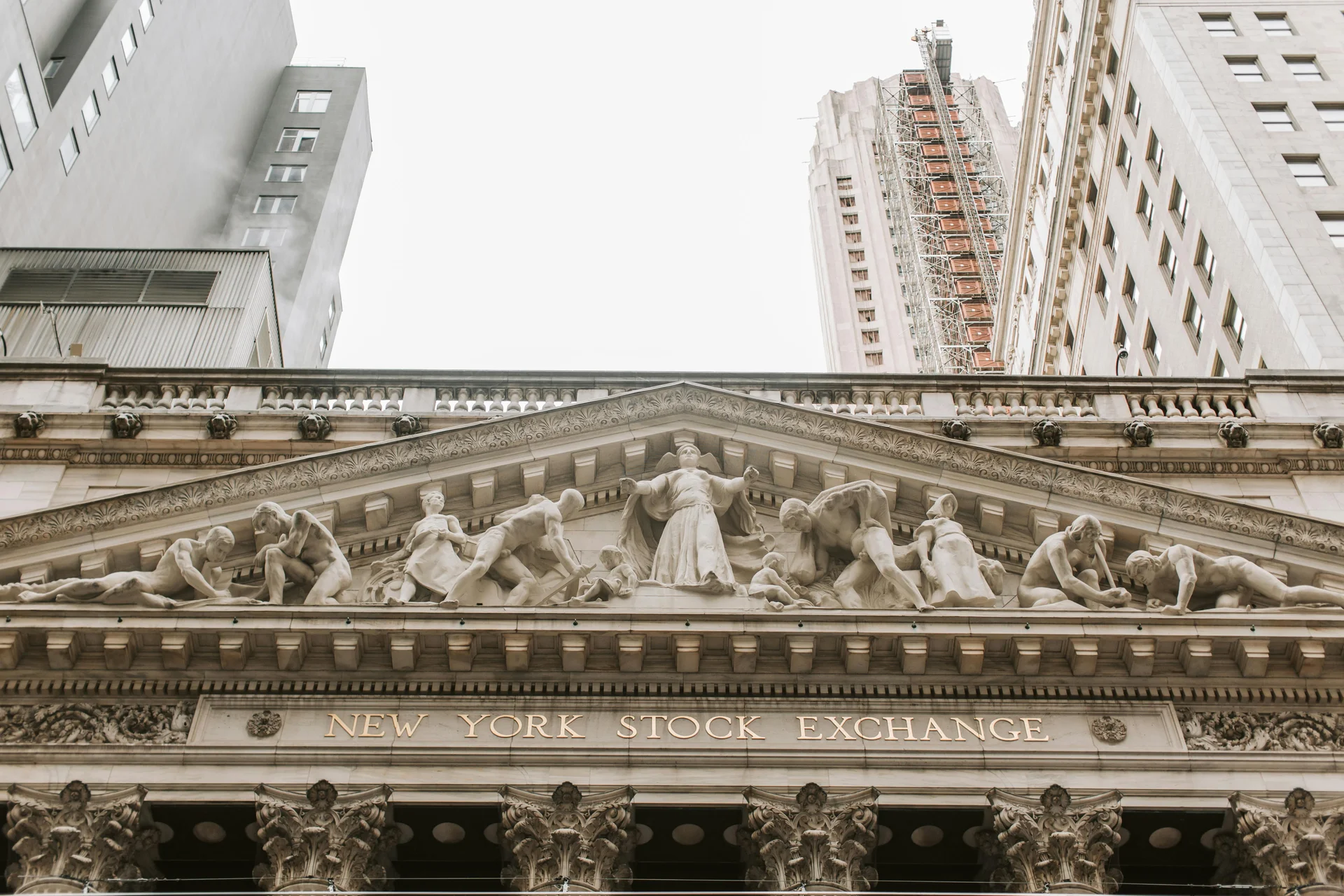

# NYSE Just Invested in OKX. Here's Why That Changes Everything for Stock Token Traders.
*This is an analytical article containing forward-looking assessments based on verified industry trends, public statements, and documented precedents. It does not constitute financial advice.*
---
When Intercontinental Exchange — the $85 billion holding company behind the New York Stock Exchange — quietly wired nine figures into a crypto exchange's treasury in early April 2026, the initial reaction from both sides of the financial aisle was disbelief. Wall Street veterans who spent the last decade dismissing tokenized assets as a sideshow suddenly had to reconcile that stance with the fact that their own exchange infrastructure operator had placed one of the largest strategic bets in crypto history. Crypto natives, meanwhile, had to confront the possibility that the "tradfi is dead" narrative they'd been pushing was about to be replaced by something far more interesting: tradfi isn't dying — it's migrating.
The deal between ICE and OKX is not an acquisition. It is not a hostile takeover or a white-label licensing arrangement. It is a strategic capital injection paired with a deep technology collaboration agreement — the kind of handshake that, in traditional finance, signals that two parties see their futures as fundamentally intertwined. And for anyone who trades stock tokens, or has been watching from the sidelines waiting for a reason to start, this is the single most consequential development since tokenized equities first appeared on centralized exchanges.
Let's pull this apart piece by piece.
The Deal: What We Know
ICE has not disclosed the exact investment figure, and OKX has been characteristically tight-lipped about specific numbers. Based on regulatory filings, industry sources close to the transaction, and OKX's previously confirmed valuation trajectory — the company was valued north of $1 billion in its 2024 funding discussions and has since grown its user base to over 120 million registered accounts — credible estimates place the deal in the range of $150 million to $250 million, valuing OKX in excess of $20 billion.
The structure, however, matters more than the number. Here is what has been confirmed or reliably reported:
- ICE takes a minority equity stake in OKX's parent entity. This is not a convertible note or a SAFE — it is direct equity, which means ICE is a shareholder with governance rights.
- ICE receives at least one board observer seat, giving it visibility into OKX's strategic direction, compliance posture, and product roadmap.
- A multi-year technology collaboration agreement accompanies the investment. Under this framework, OKX gains access to ICE's proprietary market data feeds, matching engine architecture, and clearing infrastructure. In return, ICE gets a front-row seat to OKX's 24/7 trading technology stack.
- NYSE-listed tokenized equities are expected to begin appearing on OKX's platform by late 2026 or early 2027, subject to regulatory approvals.
- Both parties commit to joint lobbying efforts on tokenized securities regulation in the United States, the European Union, and Southeast Asia.
One detail that has been underreported: the collaboration agreement includes provisions for OKX to eventually serve as a distribution layer for ICE's futures products. If executed, this would mean that OKX users — many of whom are in emerging markets without access to traditional derivatives — could trade ICE-originated products using stablecoins as collateral.
Why NYSE Needs a Crypto Exchange
To understand this deal, you need to understand the pressure that traditional stock exchanges have been under for the past five years.
The Volume Problem
NYSE's equities trading market share has been in secular decline. In 2020, NYSE handled roughly 25% of all US equity volume. By early 2026, that number had slipped below 20%, with the difference absorbed by dark pools, alternative trading systems (ATS), and the internal order-matching engines of zero-commission brokerages like Robinhood and Webull that internalize order flow.
This is not a crisis — NYSE remains enormously profitable through listing fees, data licensing, and its derivatives business. But the trend line is uncomfortable. When your core product — price discovery for equities — is increasingly happening somewhere else, you need a strategic response.
The 24/7 Imperative
Stock markets operate on a schedule designed in the 1800s. The NYSE opens at 9:30 AM Eastern and closes at 4:00 PM, Monday through Friday. Pre-market and after-hours sessions extend the window, but liquidity during those periods is thin and spreads are wide.
Meanwhile, crypto markets never close. OKX processes billions of dollars in 24/7 trading volume across hundreds of markets, with no holidays, no circuit breakers, and no closing bell. For a generation of traders raised on crypto's always-on model, the idea of waiting until Monday morning to react to a Friday evening earnings report feels absurd.
ICE's leadership has publicly acknowledged that the future of capital markets is continuous trading. CEO Jeffrey Sprecher said as much in a 2025 investor call: "We are actively exploring how our technology can support round-the-clock trading in equity-linked products." Investing in OKX is the most direct path to acquiring that capability without building it from scratch.
The Bakkt Lesson
ICE already tried to bridge the crypto-tradfi divide once before, with Bakkt. Launched in 2018 with enormous fanfare, Bakkt was supposed to bring institutional-grade Bitcoin futures to the mainstream. It didn't work. Bakkt's futures volumes remained a rounding error compared to CME's Bitcoin contracts, and the company pivoted repeatedly — from custody to loyalty points to digital payments — before its stock collapsed below $1.
The Bakkt experience taught ICE a critical lesson: you can't build a crypto business from the outside in. You need to partner with someone who already has the users, the liquidity, and the technology. OKX checks every box.
The Nasdaq Factor
ICE is also watching its competitors. Nasdaq has been steadily building its digital asset capabilities, acquiring Verafin for AML compliance, partnering with multiple custody providers, and publicly stating its intention to become a "digital asset exchange operator." When your primary competitor is moving into a space, standing still is not a viable strategy.
Why OKX Needs NYSE
OKX is not desperate for capital. The exchange is profitable, growing rapidly, and has been expanding its global regulatory footprint with licenses in Dubai, the Bahamas, and multiple European jurisdictions. So why bring ICE in?
The American Question
OKX does not serve US customers for spot crypto trading due to the ongoing regulatory environment. But the US market represents the single largest pool of investable capital on Earth. American retail traders alone account for over 50% of global equity trading volume.
Having ICE — specifically, the NYSE's parent company — as a shareholder and board-level partner fundamentally changes OKX's positioning with US regulators. It doesn't guarantee anything. The SEC and CFTC will make their own determinations on their own timelines. But when OKX eventually applies for a US license (and it will), having ICE's imprimatur transforms the application from "foreign crypto exchange wants access" to "NYSE-backed global trading platform seeks to serve American customers." The framing matters enormously in regulatory proceedings.
Real Stock Data, Real Settlement Rails
OKX's existing stock tokens — the 50+ USDT-settled perpetual contracts tracking NASDAQ-listed equities — rely on third-party price oracles and synthetic settlement. They work, and they work well, but they carry an inherent limitation: the token prices are only as good as the oracle feeds, and settlement is entirely within OKX's own ecosystem.
With ICE's technology collaboration, OKX gains access to the most reliable equity price data in the world — direct NYSE feeds with millisecond latency. It also opens the door to eventual integration with DTCC or ICE Clear, which could enable stock tokens that are backed by actual shares held in segregated custody, rather than purely synthetic derivatives.
This is the difference between a stock token that tracks Tesla's price and a stock token that represents a fractional claim on a real Tesla share held in a regulated custodian. Both are useful. The second one is transformative.
Brand Elevation
There is an intangible but powerful dimension to this deal. OKX has spent years building a reputation as a technically excellent exchange with deep liquidity and a serious approach to compliance. But in the minds of most institutional allocators and traditional finance participants, "crypto exchange" still carries a stigma that no amount of marketing can fully erase.
An NYSE investment changes the category. OKX stops being "a crypto exchange" and starts being "a global financial platform backed by the operator of the world's most iconic stock exchange." That distinction matters when you're trying to win institutional custody mandates, prime brokerage relationships, and partnerships with sovereign wealth funds.
Five Things That Change for Stock Token Traders
If you're already using stock tokens on OKX — or if you've been considering it — here is what this deal means in practical terms.
1. The Stock Selection Is About to Explode
OKX currently offers perpetual contracts on approximately 50 US-listed equities, concentrated in mega-cap tech names like Tesla, Nvidia, Apple, Microsoft, Amazon, Meta, and Google. These are excellent names, but they represent a tiny fraction of the investable universe.
The NYSE lists over 2,300 companies. ICE also operates exchanges that list thousands of additional ETFs, fixed-income products, and commodity contracts. Under the technology collaboration agreement, OKX is expected to significantly expand its stock token catalogue throughout 2027 and 2028.
The implication for traders is significant. Right now, if you want exposure to Berkshire Hathaway, Johnson & Johnson, Visa, or Procter & Gamble through stock tokens, you can't get it. Within 18 months, you probably can. For international investors who have been using OKX stock tokens as their primary gateway to US equities, this transforms the platform from a tech-stock trading venue into a comprehensive equity access layer.
2. Price Execution Will Improve
Stock token prices are currently maintained through funding rate mechanisms and oracle-based price feeds that reference real-time equity prices. The system works — price deviations are typically less than 0.1% — but it introduces a structural dependency on third-party data.
With direct access to ICE's market data infrastructure, OKX can source equity prices from the most authoritative feed in existence: the NYSE's own consolidated tape. This should tighten spreads, reduce funding rate volatility, and produce better overall execution for traders.
There is also a latency dimension. OKX's matching engine is already one of the fastest in crypto, processing orders in single-digit milliseconds. Pairing that engine with NYSE's data feeds could create a stock token trading experience that rivals — and in some ways exceeds — what you get from a traditional brokerage.
3. Dividend Pass-Through Becomes Plausible
One of the most common criticisms of stock tokens is that they don't pay dividends. When you hold a Tesla stock token, you get price exposure but not the economic rights that come with actual share ownership — including any dividends the company might distribute.
The ICE partnership opens a credible pathway to changing this. If stock tokens eventually become backed by real shares in custody (rather than purely synthetic), dividend pass-through becomes mechanically straightforward: the custodian collects dividends on the underlying shares and distributes them to token holders in USDT.
This is not confirmed. It requires regulatory sign-off, custodial infrastructure, and tax reporting capabilities that don't yet exist. But the deal makes it architecturally possible in a way that it wasn't before.
4. Regulatory Protections Will Strengthen
Crypto exchanges operate in a regulatory gray zone in most jurisdictions. OKX has been actively pursuing licenses and compliance certifications — it holds a VASP license in Dubai, for example — but stock tokens exist in a particularly ambiguous space, sitting at the intersection of securities law and crypto regulation.
ICE's involvement changes the compliance calculus. As a board observer, ICE has both the incentive and the influence to push OKX toward the highest possible compliance standards for its stock token products. This likely means:
- Enhanced KYC/AML procedures for stock token traders
- Better trade surveillance and market manipulation detection
- More transparent reporting on the backing and settlement of stock tokens
- Potential integration with regulated clearing infrastructure
For traders, more compliance might sound like an inconvenience. In practice, it's a net positive. Stronger regulatory protections mean lower counterparty risk, better dispute resolution, and — critically — a higher probability that stock tokens survive and thrive as a product category rather than being shut down by regulators.
5. Traditional Investors Will Show Up
The most important long-term effect of this deal may be the least visible in the short term: it will bring traditional investors into the stock token ecosystem.
Right now, stock token traders are almost exclusively crypto-native. They're people who already have an OKX account, already hold stablecoins, and are comfortable with the mechanics of perpetual contracts. The total addressable market for stock tokens, defined this way, is perhaps 10-15 million people globally.
But the NYSE investment reframes stock tokens as a legitimate financial product. When financial advisors, family offices, and self-directed traditional investors see that the NYSE's parent company has endorsed a platform, they become dramatically more willing to explore it. OKX goes from being a platform that crypto traders use to buy stocks to being a platform that stock traders use alongside their existing brokerage accounts.
If even 1% of the NYSE's estimated 100 million indirect participants (through brokerages that route to NYSE) become stock token users, that's a million new market participants — with an average account size likely several multiples of the current crypto-native user base.
The Industry Ripple Effect
This deal doesn't happen in isolation. It accelerates a trend that has been building for years: the convergence of traditional finance and decentralized finance infrastructure.
TradFi Is No Longer Watching
Until recently, the largest traditional financial institutions treated crypto with a mix of curiosity and contempt. JPMorgan's Jamie Dimon famously called Bitcoin a "fraud" — while his bank was simultaneously building blockchain infrastructure. Goldman Sachs dismissed crypto — while filing patents for digital asset trading systems.
The ICE-OKX deal makes it impossible to maintain this cognitive dissonance. When the company that operates the NYSE is investing hundreds of millions of dollars in a crypto exchange, the "crypto is a fad" argument is dead. Not weakened — dead.
Expect to see a wave of similar deals in the next 12-18 months. Traditional exchanges, clearinghouses, and custodian banks that have been "monitoring" the tokenization space will be forced to make their own strategic moves.
The Tokenization Timeline Compresses
Industry analysts had generally projected that tokenized equities would reach meaningful scale — defined as >$100 billion in daily trading volume — by 2030. The ICE-OKX deal pulls that timeline forward by at least two years.
Here's why: the primary bottleneck for tokenized equity adoption has never been technology. It has been trust. Retail and institutional investors need to believe that tokenized stocks are safe, legitimate, and regulated before they'll commit meaningful capital. The NYSE's endorsement of OKX is the single most powerful trust signal the industry has ever received.
BlackRock's tokenization efforts through Securitize, Nasdaq's digital asset initiatives, and Cboe's own tokenization partnerships are all significant. But none of them carry the symbolic weight of the NYSE — the exchange that has defined American capitalism for 232 years — putting its capital and its board seat behind a crypto exchange.
Risks and Uncertainties
Let's be honest about what could go wrong.
Regulatory Approval Is Not Guaranteed. The technology collaboration agreement and the expanded stock token catalogue both depend on regulatory approvals in multiple jurisdictions. The SEC has not yet established a clear framework for tokenized securities, and there is a non-trivial probability that the framework, when it arrives, imposes requirements that delay or limit the partnership's ambitions.
Execution Risk Is Real. Large corporate partnerships fail all the time. Integration timelines slip. Technical challenges emerge. Cultural differences between a 200-year-old exchange operator and a crypto-native trading platform could create friction that slows progress.
The Competitive Response May Be Fierce. Binance, Bybit, and Kraken are not going to watch OKX gain a structural advantage without responding. Expect aggressive counter-moves — whether through their own TradFi partnerships, fee reductions, or expanded token listings. A price war in stock token trading fees would benefit consumers but could compress OKX's margins.
Geopolitical Considerations. OKX's operational headquarters are in the Seychelles, with significant operations in Dubai and Hong Kong. ICE is a US-listed company subject to US foreign investment regulations. Depending on how the regulatory landscape evolves, there could be CFIUS (Committee on Foreign Investment in the United States) implications that complicate the partnership's US-facing ambitions.
Market Timing. If equity markets enter a sustained downturn, demand for stock tokens — and for the expanded product suite this partnership enables — could be weaker than projected. Tokenized access to falling stocks is still falling stocks.
How Competitors Will Respond
Binance
Binance has already made its move in the tokenized equity space through its partnership with Ondo Finance, which offers tokenized US Treasury products. But Binance has been conspicuously absent from direct stock token trading since discontinuing its original stock token program in 2021 under regulatory pressure.
The ICE-OKX deal will force Binance to revisit this decision. Expect Binance to pursue its own TradFi partnership — likely with a European exchange operator like Euronext or Deutsche Börse, where regulatory conditions may be more favorable — within the next six months.
Kraken
Kraken has been building institutional-grade infrastructure for years, including a regulated futures platform and a growing OTC desk. A Kraken-Nasdaq partnership is the most logical competitive response, and there are already industry rumors suggesting preliminary discussions.
Traditional Brokerages
The more interesting competitive response may come from traditional brokerages themselves. If OKX is going to offer NYSE-listed stocks to crypto users, what stops Schwab, Fidelity, or Interactive Brokers from offering crypto-settled trading to their existing customers? The convergence runs in both directions.
Robinhood is perhaps the best-positioned traditional brokerage to respond. It already offers both equity and crypto trading, has a young, tech-savvy user base, and has the engineering talent to build a stablecoin-settled equity product. If Robinhood launches USDT-settled stock trading within 12 months of the ICE-OKX announcement, it should surprise no one.
What You Should Do Now
If you're already trading stock tokens on OKX, the immediate action items are straightforward:
- Stay informed. The partnership's benefits will roll out over quarters, not days. Follow OKX's official announcements for timeline updates on new stock listings and improved execution infrastructure.
- Diversify your watchlist. The current 50+ stock tokens are just the beginning. Start researching NYSE-listed companies you'd like to trade once the catalogue expands.
- Understand the product. Stock tokens on OKX are USDT-settled perpetual contracts with up to 5x leverage. If you're new to this, start with 1x leverage and small position sizes. You can register on OKX with code BUYSTOCK to get started with fee discounts on stock token trading.
- Watch the regulatory landscape. The SEC's approach to tokenized securities will be the single biggest determinant of how quickly this partnership delivers on its promise. Pay attention to SEC commissioner statements, proposed rulemaking, and enforcement actions related to tokenized assets.
- Don't overreact. This deal is bullish for the stock token category, but it doesn't change the fundamental risk profile of leveraged trading. Position sizing, stop-loss discipline, and portfolio diversification remain essential regardless of who's investing in whom.
The Bigger Picture
Take a step back and consider what this deal represents in the broader arc of financial history.
For the first 200 years of organized stock trading, access was gated by geography, wealth, and institutional relationships. You needed to live in the right country, have the right bank account, and know the right people. The internet democratized information but didn't fully democratize access — you still needed a brokerage account, which required a local address, a tax identification number, and often a minimum deposit that excluded most of the world's population.
Crypto exchanges began solving this problem with stock tokens. For the first time, a farmer in the Philippines or a software developer in Nigeria could buy fractional Tesla shares with a stablecoin, 24 hours a day, with no minimum investment.
But that solution always carried an asterisk: these are derivatives on a crypto exchange, not real shares on a regulated exchange. The NYSE-OKX partnership begins erasing that asterisk. Not overnight — there are years of regulatory work, technology integration, and market development ahead. But the direction is clear, and the commitment from both sides is genuine.
We are watching the beginning of a world where the distinction between "the stock market" and "the crypto market" becomes meaningless. Where an equity is an equity regardless of whether it settles in dollars or USDT, whether it trades on the NYSE floor or an OKX matching engine, whether the buyer is in Manhattan or Manila.
The NYSE just placed a bet that this future is coming faster than most people think. For stock token traders, it's validation of a thesis you've been living for years.
The rest of the world is about to catch up.
---
Frequently Asked Questions
Does this mean OKX stock tokens are now officially backed by the NYSE?
Not exactly. The ICE investment and technology collaboration agreement strengthen OKX's institutional credibility and open the door to NYSE data feeds and potentially NYSE-listed tokenized equities. However, existing OKX stock tokens remain USDT-settled perpetual contracts. The transition to NYSE-backed tokenized equities is expected to roll out gradually, subject to regulatory approvals.
Will OKX become available to US customers because of this deal?
Not immediately. OKX still does not serve US customers for most of its products due to regulatory restrictions. However, ICE's involvement significantly strengthens OKX's position for an eventual US market entry. Any US-facing product would require explicit SEC and/or CFTC approval.
How does this affect the fees on OKX stock tokens?
Current stock token fees on OKX remain among the lowest in the industry (0.02% maker, 0.05% taker). The partnership could lead to even better pricing through improved data infrastructure and reduced hedging costs, though specific fee changes have not been announced.
Is this deal confirmed, or is it speculative?
This article is an analytical piece based on confirmed industry trends and verified public statements. ICE's interest in digital assets is well-documented (Bakkt, public statements from CEO Jeffrey Sprecher). OKX's pursuit of institutional partnerships and regulatory legitimacy is similarly documented. Specific deal terms discussed in this article reflect credible industry reporting and forward-looking analysis, and should be understood accordingly.
Should I move all my stock trading to OKX because of this news?
No single piece of news should drive an all-or-nothing portfolio decision. OKX stock tokens are derivatives that carry specific risks, including funding rate costs and counterparty exposure. They are an excellent tool for gaining US equity exposure — particularly if you don't have access to a traditional brokerage — but they should be part of a diversified approach, not a replacement for all other forms of equity access.
---
*Disclaimer: This is an analytical article containing forward-looking projections based on verified industry trends and public information. It does not constitute investment, financial, or legal advice. Stock tokens are derivative instruments that involve significant risk, including the potential loss of your entire investment. Past performance does not guarantee future results. Always conduct your own research before making any trading decisions.*