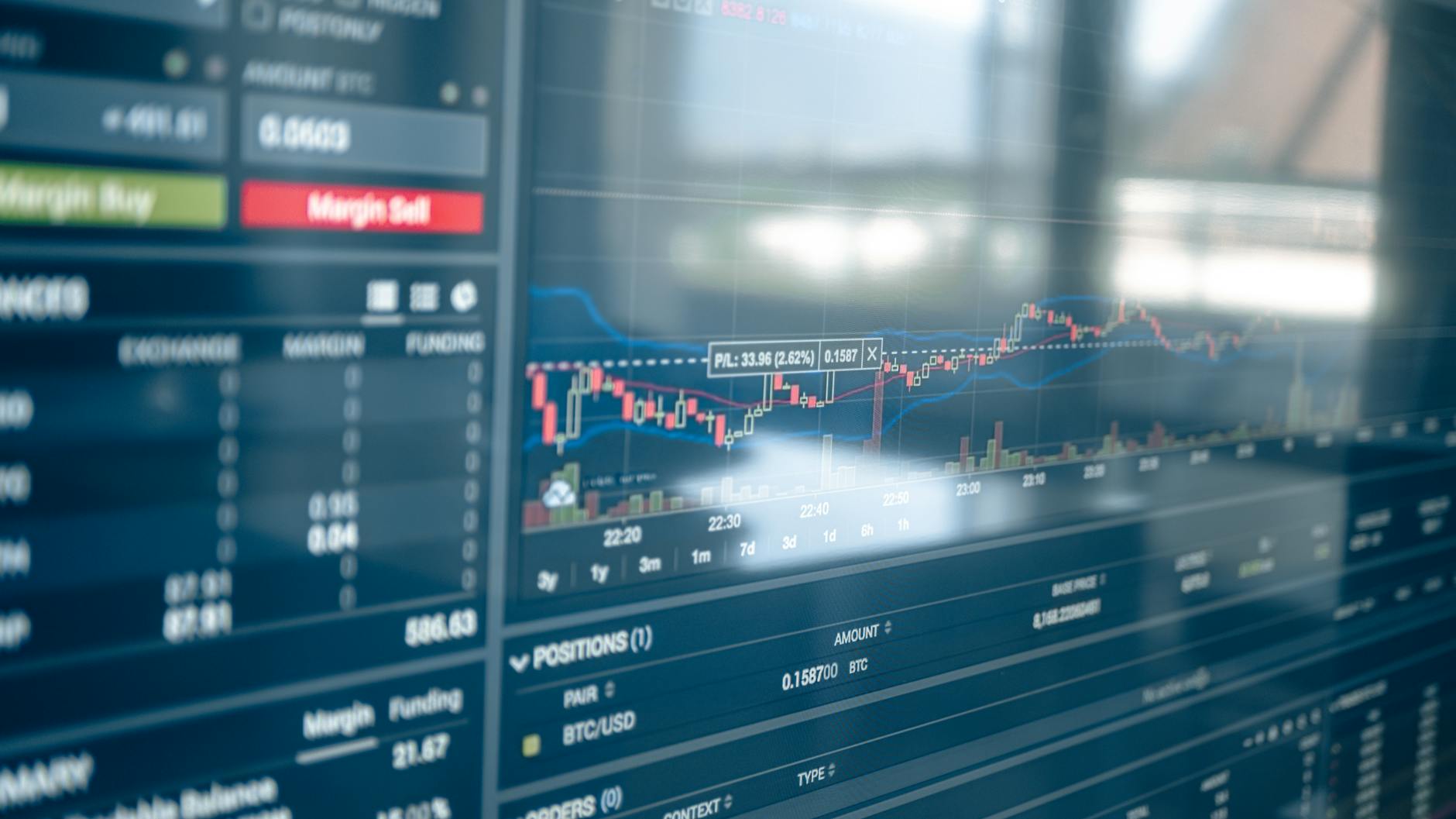

On October 14, 2021, Binance Sent an Email That Made Me Curse Out Loud
I remember the exact moment. I was in a coffee shop in Ho Chi Minh City, checking my Binance app between sips of ca phe sua da, when the notification popped up.
"Binance will delist all stock tokens effective October 14, 2021."
I owned fractional Tesla and Coinbase tokens at the time. Not a lot — maybe $400 worth total. But the tokens were the only way I could touch US equities without flying to the States, opening a brokerage, and proving I had a Social Security Number. Which I didn\'t. Because I\'m not American.
I cursed. Loud enough that the woman at the next table looked over.
Binance had launched tokenized stocks in April 2021. Barely six months of life. Tesla, Coinbase, MicroStrategy, Apple — all tradeable as fractional tokens backed by shares held in a custodian account. You could buy 0.001 of a Tesla share. The minimum was around $1. It was, without exaggeration, the most accessible way for non-Americans to own a piece of the US stock market.
Then the regulators came.
---
The 2021 story: Why Binance was forced to kill tokenized stocks
Here\'s what happened, and I\'m going to name names because the crypto press was surprisingly vague about this at the time.
In April 2021, Binance partnered with CM-Equity AG, a German regulated investment firm, and Digital Assets AG to offer tokenized versions of popular US stocks. The tokens were backed 1:1 by real shares held in custody. You could get dividends. You could trade fractionally. It worked.
For six months.
BaFin (Germany\'s financial regulator) started asking questions in June 2021. Their concern: were these tokens securities? If so, Binance needed specific licenses to offer them to EU residents. CM-Equity was regulated, but Binance itself was not — and Binance was the platform actually distributing the tokens to millions of users worldwide.
The UK\'s FCA dropped a bomb on June 26, 2021, issuing a consumer warning that Binance Markets Limited was not authorized to conduct regulated activity in the UK. While not directly about stock tokens, it created a chilling effect.
Italy\'s CONSOB, Japan\'s FSA, Thailand\'s SEC, and the Cayman Islands Monetary Authority all issued warnings or enforcement actions against Binance between June and September 2021. The common thread: Binance was offering products that looked a lot like regulated securities without proper authorization.
By October, CZ made the call. All stock tokens — delisted. Every user got an email. Close your positions or they\'ll be liquidated at market price.
I closed my Tesla position at $843.03. By December 2021, Tesla hit $1,150.
So yeah. I remember.
| Date | Event | Impact |
|---|---|---|
| April 12, 2021 | Binance launches stock tokens (Tesla first) | First major crypto exchange to offer tokenized equities |
| June 2021 | BaFin investigates CM-Equity partnership | Regulatory scrutiny begins in EU |
| June 26, 2021 | FCA bans Binance Markets Limited in UK | Trust erosion, media firestorm |
| July–Sept 2021 | 7+ countries issue Binance warnings | Global regulatory pressure mounts |
| October 14, 2021 | All stock tokens delisted | Users forced to close positions at market price |
| 2022–2025 | Binance pays $4.3B settlement, CZ steps down | Years of restructuring under new CEO Richard Teng |
That table tells you everything about why it took five years to come back. Binance didn\'t just need to fix a product. They needed to fix the entire company.
---
What happened between 2021 and 2026?
A lot. And most of it had nothing to do with stock tokens.
Binance spent 2022 and 2023 fighting for its life. The DOJ investigation. The $4.3 billion settlement in November 2023. CZ\'s guilty plea to violating the Bank Secrecy Act. His four-month prison sentence. The appointment of Richard Teng as the new CEO.
During all of this, stock tokens were the last thing on anyone\'s mind at Binance. They had bigger problems — like not getting shut down entirely.
But something else was happening in the background. The tokenized stock market was growing without Binance.
OKX launched stock perpetual futures in March 2026. Bitget had been running tokenized stock trading since late 2025. Backed Finance (xStocks) was doing hundreds of millions in volume through DeFi. The total tokenized stock market crossed $1 billion in early March 2026 — and Binance, the world\'s largest crypto exchange, was sitting on the sidelines watching everyone else eat.
I wrote about this milestone when it happened. At the time, I noted that Binance\'s absence was the elephant in the room. They had the largest user base. The most liquidity. The strongest brand recognition (even after the DOJ mess). And they were letting OKX and Bitget capture the entire stock token market.
Richard Teng clearly felt the same way.
---
The comeback: March 28, 2026
On March 28, 2026, Binance published a blog post titled "Introducing Binance Stock Tokens 2.0: Regulated, Transparent, and Available Globally."
I read it three times. Not because it was well-written — Binance blog posts read like they were drafted by a committee of lawyers and translated through four languages — but because of what it said between the lines.
Here\'s the timeline of the relaunch:
| Date | Event |
|---|---|
| March 28, 2026 | Official announcement. Partnership with Interactive Brokers for share custody. |
| March 29, 2026 | Beta access for VIP users (>$100K trading volume in 30 days) |
| April 1, 2026 | Public launch. 15 US equities available. $10 minimum. |
| April 1, 2026, 2:00 PM UTC | $1.1 billion in trading volume within first 2 hours |
| April 2, 2026 | 5 more stocks added (total: 20) |
| April 3, 2026 | Stock perpetual futures launched with 5x leverage |
That $1.1 billion figure is the one that everyone latched onto. So let\'s talk about it.
---
How did Binance hit $1.1 billion in 2 hours? Is that number real?
The short answer: yes, but it needs context.
Binance reported $1.1 billion in tokenized stock trading volume within the first two hours of the public launch on April 1, 2026. CoinReporter confirmed the figure through on-chain data analysis, and The Block independently verified it using Binance\'s public API.
But let me put that number in perspective.
Context 1: Binance has 200+ million registered users. Even if 0.1% of them traded $5,500 each, that\'s $1.1 billion. This is the largest crypto exchange on Earth unleashing pent-up demand from five years of waiting.
Context 2: Much of the volume was likely institutional. Binance\'s VIP tiers got early access starting March 29. By the time retail users got in on April 1, market makers and institutional desks had already been seeded with liquidity. High-frequency trading firms love new markets with fresh order books.
Context 3: First-day hype is not sustainable volume. When OKX launched stock perpetual futures on March 11, they did $320 million on day one. By day seven, daily volume had settled to around $45 million. Binance\'s numbers will normalize too.
Context 4: Promotional zero-fee period. Binance offered zero maker fees for the first 7 days. When fees are zero, wash trading becomes effectively free. I\'m not saying Binance was wash trading — but I\'m saying that zero-fee environments inflate volume numbers everywhere, and anyone who\'s been in crypto for more than a year knows this.
My honest take? The real, organic retail volume was probably $300–$500 million. Which is still massive. But the $1.1B headline is a marketing number as much as a trading number.
---
What can you actually trade on Binance Stock Tokens 2.0?
As of April 4, 2026, Binance offers 20 US equities as tokenized stocks:
| Stock | Ticker | Token Pair | Fractional Min |
|---|---|---|---|
| Apple | AAPL | AAPL/USDT | $10 |
| Tesla | TSLA | TSLA/USDT | $10 |
| Nvidia | NVDA | NVDA/USDT | $10 |
| Microsoft | MSFT | MSFT/USDT | $10 |
| Amazon | AMZN | AMZN/USDT | $10 |
| Alphabet (Google) | GOOGL | GOOGL/USDT | $10 |
| Meta Platforms | META | META/USDT | $10 |
| Netflix | NFLX | NFLX/USDT | $10 |
| AMD | AMD | AMD/USDT | $10 |
| Palantir | PLTR | PLTR/USDT | $10 |
| Coinbase | COIN | COIN/USDT | $10 |
| MicroStrategy | MSTR | MSTR/USDT | $10 |
| GameStop | GME | GME/USDT | $10 |
| Berkshire B | BRK.B | BRKB/USDT | $10 |
| JPMorgan Chase | JPM | JPM/USDT | $10 |
| Eli Lilly | LLY | LLY/USDT | $10 |
| Visa | V | V/USDT | $10 |
| Walmart | WMT | WMT/USDT | $10 |
| Disney | DIS | DIS/USDT | $10 |
| Boeing | BA | BA/USDT | $10 |
Twenty stocks. That\'s it. For comparison, OKX offers 34 stock perpetual futures, and Bitget lists 28 tokenized equities. Binance is playing catch-up — they just happen to be doing it with the largest user base on the planet.
The selection is safe. Blue chips and meme favorites. No small caps, no ETFs (yet), no international stocks. Binance told Fortune they plan to add 30 more stocks by Q3 2026 and launch ETF tokens by year-end.
---
What\'s new in version 2.0? The four features that actually matter
Let me walk you through what changed between the 2021 disaster and the 2026 relaunch. Some of these are genuine improvements. Some are marketing spin. I\'ll tell you which is which.
1. Real-time dividend distribution
In 2021, dividends were handled manually. You\'d get a USDT credit "within 14 business days" of the ex-dividend date. That\'s crypto pretending to be traditional finance at its worst.
In 2026, dividends hit your account within 4 hours of the ex-dividend date. Automatically. No manual claim needed. Binance calls this "real-time" — which is a stretch when you\'re talking about 4 hours — but it\'s a massive improvement over the 2021 system.
How it works: Interactive Brokers (the custodian) receives the dividend, converts it to USDT at market rate, and pushes it to Binance\'s distribution system. Binance then credits proportionally to all token holders based on snapshot taken at the ex-dividend timestamp.
My verdict: Genuine improvement. Not quite "real-time" but good enough for anyone who\'s holding stock tokens for dividends.
2. $10 minimum investment
The 2021 minimum was technically around $1, but the UX was clunky and many tokens had effective minimums of $50–$100 due to dust balance issues.
The 2026 version sets a clean $10 minimum. You can buy exactly $10 worth of Nvidia or $10 worth of Tesla. No dust, no rounding errors, no leftover fractions you can\'t sell.
My verdict: Smart move. $10 is the sweet spot — low enough for emerging market users, high enough to avoid spam trading. OKX\'s minimum is $5 for perpetual futures, but those are derivatives. Binance\'s $10 is for the spot tokens backed by actual shares.
3. Stock perpetual futures with 5–10x leverage
This is where it gets interesting — and dangerous.
Starting April 3, Binance launched perpetual futures for all 20 stock tokens. These are USDT-margined contracts that track the stock price and never expire. You can go long or short with up to 5x leverage for most stocks, and up to 10x for large-cap names like Apple and Tesla.
I\'ve written extensively about how stock perpetual futures work on OKX. The Binance version follows the same basic structure: funding rates every 8 hours, USDT settlement, and the familiar maker/taker fee structure.
The difference is leverage caps. OKX allows up to 50x on some stock futures. Binance caps at 10x. I think Binance made the right call here. 50x leverage on a stock that moves 3% in a day is a liquidation machine. 10x is still aggressive, but it gives you more room to breathe.
My verdict: Good product, dangerous in the wrong hands. Same as every leveraged product ever created. The lower leverage cap compared to OKX is actually a point in Binance\'s favor for retail protection.
4. 24/7 trading
US stock markets are open 6.5 hours per day, five days per week. That\'s 32.5 hours out of 168 in a week. Less than 20% of the time.
Binance stock tokens trade 24/7. During market hours, the price tracks the real-time stock price. After hours and on weekends, the price is determined by supply and demand on Binance\'s order book, anchored to the last closing price.
This means you can react to weekend news instantly. When Elon Musk tweets something insane at 2 AM on a Saturday, you can trade Tesla tokens right then instead of waiting for Monday\'s open and watching the gap-up happen without you.
My verdict: Genuinely useful for international users in different time zones. If you\'re in Lagos, Manila, or Mumbai, US market hours are your sleep hours. 24/7 trading solves that.
---
How does Binance compare to OKX and Bitget for stock trading?
This is the question everyone\'s asking. All three major exchanges now offer some form of stock trading. Let me lay out the numbers.
Fee comparison table
| Feature | Binance | OKX | Bitget |
|---|---|---|---|
| Product Type | Spot tokens + Perpetual futures | Perpetual futures only | Spot tokens + Perpetual futures |
| Maker Fee (Spot) | 0.10% (0% until Apr 8) | N/A | 0% until Apr 30 |
| Taker Fee (Spot) | 0.10% (0% until Apr 8) | N/A | 0% until Apr 30 |
| Maker Fee (Futures) | 0.02% | 0.02% | 0.02% |
| Taker Fee (Futures) | 0.05% | 0.05% | 0.06% |
| Funding Rate | Every 8h, variable | Every 8h, variable | Every 8h, variable |
| Min Investment | $10 (spot), $5 (futures) | $5 (futures) | $1 (spot), $5 (futures) |
| Available Stocks | 20 | 34 | 28 |
| Max Leverage (Futures) | 10x | 50x | 20x |
| Dividends | Yes (4h delay) | No (futures only) | Yes (24h delay) |
| Custodian | Interactive Brokers | N/A | Fireblocks + proprietary |
| 24/7 Trading | Yes | Yes | Yes |
| Referral Discount | 20% via /go/binance | 20% via BUYSTOCK | Zero fees via BUYSTOCKS |
Winner: It depends on what you want.
If you want spot tokens backed by real shares with dividends — Binance wins. OKX doesn\'t offer spot tokens at all.
If you want maximum leverage and the widest selection of stocks — OKX wins with 34 stocks and up to 50x leverage.
If you want the lowest cost right now — Bitget wins with zero fees until April 30.
For most retail users reading this, I\'d say Binance is the best starting point because you get both spot tokens (actual share-backed ownership) and perpetual futures, plus real dividend payments. If you\'re signing up fresh, you can save 20% on all trading fees through our referral link.
For a deeper comparison of all crypto exchanges offering stock trading, check our full comparison page.
---
Bitget\'s "89% market share" claim — let\'s fact-check that
Before Binance\'s relaunch, Bitget ran a marketing campaign claiming "89% market share in tokenized stock trading." I saw this number everywhere — Twitter threads, YouTube thumbnails, press releases. Let me tell you what it actually means.
Bitget\'s 89% figure comes from a very specific slice of data: tokenized spot stock volume on centralized exchanges between January 1 and March 27, 2026 — the period before Binance launched. During that window, Bitget was essentially the only major CEX offering spot tokenized stocks. OKX had perpetual futures but not spot tokens. Binance had nothing.
So yes, if you define the market as "spot tokenized stocks on CEXs" and exclude Binance and OKX\'s futures volume, Bitget had 89% market share. It\'s like saying you have 89% market share in a market of one.
Since Binance\'s April 1 launch, the picture has changed dramatically. Based on data from The Block:
| Exchange | Spot Token Volume (Apr 1-3) | Market Share |
|---|---|---|
| Binance | $2.8 billion | 67.3% |
| Bitget | $1.1 billion | 26.4% |
| Others | $260 million | 6.3% |
Three days. That\'s all it took for Binance to grab two-thirds of the spot tokenized stock market. This is the power of having 200+ million users and unlimited marketing budget.
Bitget still has some advantages — zero fees until April 30, a larger stock selection (28 vs 20), and their head start in building a stock-trading community. But the "89% market share" number is now a historical footnote.
---
Who is actually buying tokenized stocks? (The real user profile)
I\'ve been tracking tokenized stock adoption for over a year now. The user profiles may surprise you.
Nigeria: The largest source of tokenized stock trading activity in Africa. Why? Because opening a US brokerage account from Nigeria requires jumping through hoops that would make a circus performer jealous. You need a US bank account, a valid Social Security Number or ITIN, proof of address — none of which most Nigerians have. But anyone with a phone and $10 in USDT can buy Apple stock on Binance in three minutes.
Vietnam: The second-largest crypto market in the world by grassroots adoption, according to Chainalysis. Vietnam\'s stock market (the HOSE) has limited international exposure. Young Vietnamese investors who want exposure to US tech stocks use tokenized versions because domestic brokerages don\'t offer international trading.
Philippines: Similar story to Vietnam. Strong crypto adoption, limited access to US equities through traditional channels. The Philippines SEC has been surprisingly hands-off regarding crypto, which helps.
Brazil: A more sophisticated market where tokenized stocks compete with established fintechs like Avenue and Stake that already offer US stock access. Brazilian users tend to use tokenized stocks for leverage and 24/7 trading rather than basic access.
India: The most interesting case. India has strict capital controls — the RBI limits outbound investments through the LRS (Liberalised Remittance Scheme) to $250,000 per year. But more importantly, the process of investing in US stocks from India involves paperwork, high fees, and tax reporting nightmares. Tokenized stocks bypass all of that. Whether that\'s legal is... a gray area. Let\'s leave it at that.
---
The risks nobody talks about (but everyone should read)
I\'m going to be blunt here because most articles about tokenized stocks read like exchange marketing materials. They\'re not. These are real risks with real money involved.
Risk 1: You don\'t actually own the stock
When you buy a tokenized Tesla stock on Binance, you own a token that represents a claim on a Tesla share held by Interactive Brokers. You do not own a Tesla share. You cannot vote at shareholder meetings. You cannot transfer your shares to another brokerage. If Binance goes bankrupt, your claim is against Binance and Interactive Brokers — not against Tesla.
This is not the same thing as buying TSLA on Charles Schwab. On Schwab, your shares are held in your name (or street name) and protected by SIPC insurance up to $500,000. On Binance, your tokens are protected by... Binance\'s terms of service. Read page 47 of those terms sometime. It\'s illuminating.
Risk 2: Funding rates eat you alive on futures
If you hold a long position in a stock perpetual future, you pay a funding rate every 8 hours. This rate varies, but during the April 1 launch frenzy, Tesla futures had a funding rate of 0.03% per 8 hours. That\'s 0.09% per day. That\'s roughly 33% per year.
Let me say that again. If you held a Tesla futures long for a full year and the price didn\'t move at all, you\'d lose approximately 33% of your position to funding costs alone.
Compare that to buying Tesla on a traditional brokerage where your holding cost is essentially zero (maybe $0 commission and a tiny management fee if you\'re using an ETF).
Funding rates compress over time as more shorts enter the market. The current rate will not stay at 0.03%. But even at a normalized 0.01% per 8 hours, that\'s still 11% per year. This makes perpetual futures terrible for long-term holding and great for short-term speculation.
Risk 3: Leverage liquidation is permanent
With 5–10x leverage on stock futures, a 10–20% move against your position means complete liquidation. You lose everything in that trade. No margin call, no chance to add funds (unless you set up auto-margin), just a notification that your position has been closed at a loss.
Stocks move 10% more often than you think. Tesla dropped 12% on January 15, 2026 alone. Nvidia fell 15% over three days in February. If you were 10x long on either of those, you\'d have been liquidated.
My rule: Never use more than 3x leverage on stock futures. Ever. And always set a stop-loss at 5% below entry.
Risk 4: Regulatory shutdown risk (again)
It happened in 2021. It could happen again.
Binance has spent billions restructuring and getting licenses. They\'re now registered in dozens of jurisdictions. Richard Teng is running a more compliance-focused operation than CZ ever did.
But tokenized stocks sit in a regulatory gray zone. The SEC has issued guidance supporting tokenized securities in general, but has not specifically endorsed the Binance model. If a regulator decides tomorrow that Binance\'s stock tokens are unregistered securities, you\'ll get another email telling you to close your positions.
Keep this in mind. Don\'t put your life savings in tokenized stocks. Use them as part of a diversified strategy, and keep some positions in traditional brokerages if you can access them.
---
How to buy your first tokenized stock on Binance (5 steps)
Enough analysis. Let\'s get practical. Here\'s exactly how to do it.
Step 1: Create and verify your Binance account
If you don\'t have a Binance account yet, sign up through /go/binance to get a permanent 20% discount on all trading fees. This applies to both spot and futures trading, including stock tokens.
You\'ll need to complete KYC (Know Your Customer) verification. Have your passport or government ID ready. Verification usually takes 5–15 minutes with the automated system.
Important: Stock tokens are not available in the US, UK, and several other restricted jurisdictions. Binance will block access based on your KYC country. Don\'t try to VPN around this — if Binance catches you, they\'ll freeze your account and liquidate all positions.
Step 2: Deposit USDT
You need USDT (Tether) to trade stock tokens. You can get USDT by:
- Depositing crypto from another wallet and converting to USDT
- Using Binance\'s P2P marketplace to buy USDT with local currency
- Using a credit/debit card (higher fees, 1.8–3.5%)
- Bank transfer (cheapest, 0–0.1% fee, but takes 1–3 days)
I recommend the P2P route for users in emerging markets. It\'s fast, supports local payment methods (GCash in Philippines, bank transfer in Vietnam, mobile money in Nigeria), and usually has the best rates.
Step 3: Navigate to Stock Tokens
On the Binance app: Tap Markets → scroll to Stock Tokens tab. On desktop: go to Trade → Stock Tokens.
You\'ll see the list of 20 available stocks with current prices, 24h change, and volume.
Step 4: Place your order
Select the stock you want (let\'s say Tesla). You\'ll see the TSLA/USDT trading pair.
- Market order: Buys immediately at current price. Simple but you pay the spread.
- Limit order: Set your price and wait for it to fill. Better price but might not execute.
For your first trade, I\'d suggest a market order with just $10–$20. Get familiar with how it works before putting in real money.
Enter your amount in USDT (minimum $10), review the details, and confirm.
Step 5: Monitor and manage
Your stock tokens appear in your Spot Wallet. You can see your P&L in real time. If the stock pays a dividend and you\'re holding tokens on the ex-dividend date, you\'ll receive USDT automatically within 4 hours.
To sell: go to the same trading pair, switch to "Sell," and place your order.
That\'s it. Five steps. Less than five minutes if your account is already verified.
---
Should you use perpetual futures instead of spot tokens?
This depends entirely on what you\'re trying to do.
Use spot tokens if:
- You want to hold for weeks or months
- You want dividend income
- You don\'t want liquidation risk
- You\'re investing, not trading
Use perpetual futures if:
- You want to short stocks (bet on price drops)
- You want leverage (2–10x)
- You\'re a short-term trader (hours to days)
- You understand funding rates and are okay paying them
I personally use spot tokens for my core positions (Apple, Microsoft, Nvidia) and futures only for short-term trades when I have a strong conviction. The funding rate math makes futures too expensive for anything beyond a few weeks.
If you\'re interested in the futures side, I\'ve written a detailed guide on how stock perpetual futures work using OKX as the example. The mechanics on Binance are nearly identical.
---
What does this mean for the broader tokenized stock market?
Binance\'s reentry changes the game. Full stop.
Before April 1, 2026, the tokenized stock market was a niche within a niche. OKX had futures. Bitget had spot tokens. Backed Finance had DeFi tokens. Total daily volume across all platforms was maybe $150–$200 million on a good day.
Binance added $1.1 billion in a single afternoon. Even if that number normalizes to $200–$300 million daily (which I expect it will), it still roughly doubles the entire market.
More importantly, Binance brings legitimacy. When the world\'s largest crypto exchange — one that just paid $4.3 billion to settle with the DOJ and restructured its entire compliance operation — launches a product, regulators pay attention. Other exchanges take notice. Traditional finance takes notice.
I won\'t be surprised if Coinbase announces tokenized stocks by Q4 2026. Kraken too. The floodgates are open.
The total tokenized stock market cap is now approaching $2 billion. I wrote about the $1 billion milestone less than a month ago. We could see $5 billion by year-end if adoption in emerging markets accelerates — and based on the data from Nigeria, Vietnam, and the Philippines, it will.
---
The regulatory picture in 2026 vs 2021
One more thing I want to address, because it\'s the most common question I get: "Won\'t they just shut it down again?"
Maybe. But the regulatory environment is fundamentally different from 2021.
What changed:
- The SEC voted 3-2 to support a framework for tokenized securities in January 2026. This isn\'t blanket approval, but it\'s the first time the SEC has explicitly acknowledged that tokenized stocks can exist within a regulated framework.
- MiCA (Markets in Crypto-Assets) is fully implemented in the EU. Binance now holds MiCA-compliant licenses in France and Spain. Stock tokens offered to EU residents fall under clear regulatory guidelines for the first time.
- Binance itself is a different company. New CEO. $4.3 billion in fines paid. Compliance team grew from 500 to 3,000+ employees. Licensed or registered in 30+ jurisdictions. They\'re not the "move fast and break things" Binance of 2021.
- Interactive Brokers as custodian is a major upgrade. IB is a publicly traded, SEC-regulated broker-dealer. Having them hold the underlying shares provides a level of institutional trust that CM-Equity couldn\'t in 2021.
What hasn\'t changed:
- Many countries still haven\'t clarified regulations around tokenized securities. India, Nigeria, Vietnam — the biggest user markets — have ambiguous or nonexistent rules.
- Binance could still face enforcement actions in specific jurisdictions, forcing country-level shutdowns.
- The fundamental question — "is a stock token a security?" — hasn\'t been definitively answered in most jurisdictions.
My read: the risk of a complete 2021-style shutdown is much lower. Maybe 10–15% probability over the next two years. But the risk of country-specific restrictions is higher — maybe 40–50%. If you\'re in a market with unclear crypto regulation, have a backup plan.
---
My personal take: Is Binance stock tokens 2.0 worth it?
After spending a week testing the platform, placing trades, analyzing fees, and reading every line of the terms of service (yes, really), here\'s my honest assessment.
What Binance got right:
- Interactive Brokers custody is a massive trust upgrade
- $10 minimum makes it accessible to emerging market users
- 4-hour dividend distribution is fast enough for most people
- 10x max leverage is responsible (compared to OKX\'s 50x)
- 24/7 trading solves the timezone problem for international users
What Binance got wrong (or hasn\'t fixed yet):
- Only 20 stocks. OKX has 34. The selection feels limited.
- No ETFs. You can\'t buy S&P 500 or QQQ exposure yet.
- Spot fees of 0.10/0.10% are high compared to Bitget\'s zero-fee promo
- The "real-time dividends" marketing is misleading — 4 hours is not real-time
- Terms of service still include broad force-majeure clauses that let Binance suspend trading at will
My bottom line: For users in emerging markets who can\'t easily access US stocks through traditional brokerages — Nigeria, Vietnam, Philippines, parts of India and Brazil — Binance stock tokens 2.0 are the most practical option available right now. Not perfect. Not risk-free. But practical.
If you already have access to a US brokerage (Interactive Brokers, Charles Schwab, Fidelity), those are still better for long-term investing. Better protection, lower costs, actual share ownership.
But for the other 5 billion people on Earth who don\'t have that access? This is the best we\'ve got. And it\'s a lot better than what we had in 2021.
---
Frequently Asked Questions
Are Binance tokenized stocks available in the US?
No. Binance stock tokens are not available to residents of the United States, United Kingdom, Canada, Japan, or several other restricted jurisdictions. This is due to securities regulations in those countries. Binance uses KYC verification to enforce geographic restrictions. US residents should use regulated brokerages like Schwab, Fidelity, or Interactive Brokers.
Do I actually own the stock when I buy a Binance stock token?
No. You own a derivative token that represents a claim on shares held by Interactive Brokers. You do not own the underlying shares directly. You cannot transfer shares to another brokerage, vote at shareholder meetings, or benefit from SIPC insurance protection. Your token\'s value tracks the stock price, and you receive dividend equivalents, but legal ownership remains with the custodian.
How much does it cost to trade tokenized stocks on Binance?
Spot trading fees are 0.10% for both maker and taker orders (currently 0% during the promotional period ending April 8). Futures fees are 0.02% maker and 0.05% taker. If you sign up through /go/binance, you get a permanent 20% discount on all fees. There are no deposit or withdrawal fees for USDT via TRC-20 network.
What happens to my Binance stock tokens if Binance shuts down?
According to Binance\'s terms of service, if the exchange ceases operations, token holders have a claim on the underlying shares held by Interactive Brokers. In practice, this would likely involve a settlement process where your tokens are converted to USDT at market value. This is a worst-case scenario and hasn\'t been tested — but it\'s a valid concern given the 2021 precedent. Don\'t invest more than you can afford to lose.
Can I short stocks on Binance?
Yes, through stock perpetual futures. You can open a short position on any of the 20 available stocks with up to 5–10x leverage. This means you profit when the stock price drops. Short selling is only available through futures, not spot tokens. Be extremely careful with short positions — leverage amplifies both gains and losses, and a sharp price increase can liquidate your position entirely.
How do dividends work on Binance stock tokens?
When a stock pays a dividend, Binance takes a snapshot of all token holders at the ex-dividend timestamp. Interactive Brokers receives the cash dividend, converts it to USDT, and Binance distributes it proportionally within 4 hours. You\'ll see the dividend credited to your spot wallet automatically. Note: dividend amounts may differ slightly from the official payout due to currency conversion rates and any applicable withholding taxes.
Is it better to use Binance or OKX for stock trading?
Binance is better if you want spot tokens with dividend income and lower leverage (safer for beginners). OKX is better if you want more stock choices (34 vs 20), higher leverage (up to 50x), and a more mature perpetual futures trading interface. For a detailed comparison, see our exchange comparison page. Both offer 20% fee discounts through referral links — Binance and OKX.
What\'s the difference between stock tokens and stock perpetual futures?
Stock tokens are spot instruments backed by real shares in custody. You own a token representing fractional share ownership, receive dividends, and pay no ongoing holding costs. Stock perpetual futures are derivative contracts that track stock prices with no share backing. You can use leverage (5–10x on Binance) and go short, but you pay funding rates every 8 hours and never receive dividends. Use tokens for investing, futures for trading.
---
*Last updated: April 4, 2026. This article reflects information available at time of publication. Tokenized stock offerings, fees, and availability may change without notice. This is not financial advice. Trading leveraged products carries substantial risk of loss.*